
Menu



In the criminal policy of the Socialist Rule-of-Law State of Vietnam, amnesty is not merely a reduction of the imprisonment term, but primarily a decision to grant an opportunity to remake their lives for offenders who have shown genuine rehabilitation progress. The 2013 Constitution stipulates that amnesty is the constitutional authority of the State President. The 2018 Law on Amnesty further concretizes the principles, timing, procedures, conditions, and the rights and obligations of amnesty recipients, clearly demonstrating the viewpoint: punishment combined with leniency, prioritizing the goals of education, rehabilitation, and community reintegration.
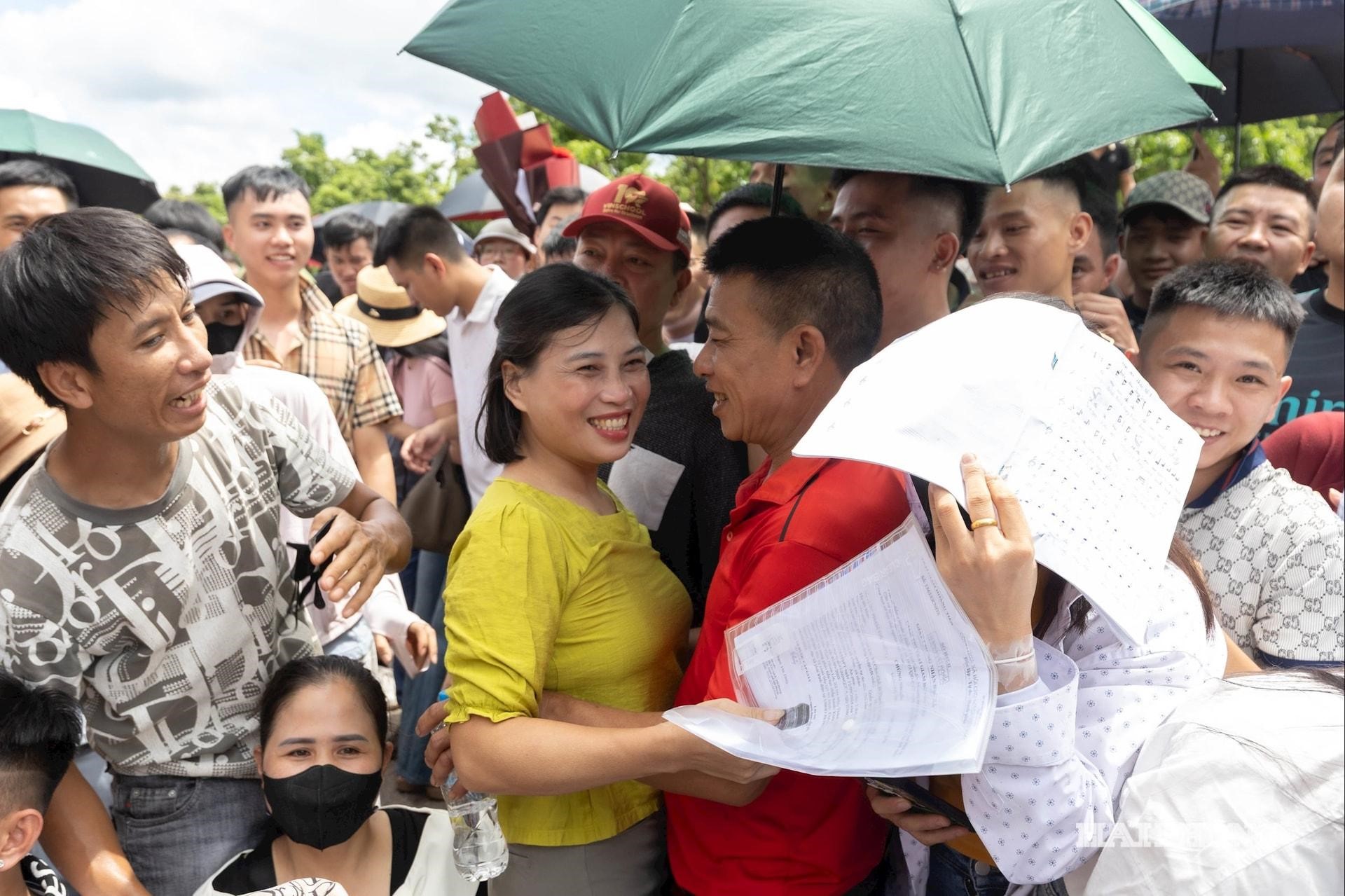
Since 2009, the State has implemented many amnesty rounds on significant events and major national holidays, granting early release to hundreds of thousands of inmates with good records of study, labor, and rehabilitation to return to their families and society. Specifically in the recent period, on June 30, 2021, the State President signed the 2021 Amnesty Decision ; in 2022, on the occasion of National Day (September 2), 2,434 eligible inmates were granted amnesty along with 3 persons with temporarily suspended sentences and 1 person with postponed imprisonment. In 2024, the State President continued to decide on amnesty for 3,763 inmates and 2 persons with temporarily suspended imprisonment sentences.
Notably, 2025 marks many significant historical events for the nation, highlighted by the 50th Anniversary of the Liberation of the South and National Reunification (April 30) and the 80th National Day (September 2). Consequently, the scale of amnesty in 2025 is significantly larger than in previous years, with two rounds of review. In the first round on the occasion of April 30, 2025, the State President signed an amnesty decision for 8,056 persons (including 8,055 inmates serving sentences and 01 person with a suspended sentence). By the second round on the occasion of September 2, 2025, this figure increased to 13,915 inmates and 05 persons with temporarily suspended imprisonment sentences being granted freedom. In total, during 2025, nearly 22,000 people enjoyed the joy of reunion thanks to this special leniency policy.
A notable highlight in recent amnesty rounds is the application of a non-discriminatory leniency policy toward inmates of foreign nationality. This humanitarian policy affirms that the State of Vietnam always guarantees human rights and treats all inmates equally, regardless of nationality, religion, or ethnicity. Specifically, in the 2024 amnesty round, 20 foreign inmates were granted amnesty. In 2025, this figure increased significantly, with 25 foreign inmates granted amnesty during the April 30 round and 66 inmates during the September 2 round, bringing the total number of foreign inmates granted amnesty in the year to 91 people, belonging to various nationalities. This has been highly regarded by international opinion and diplomatic agencies, viewing it as clear proof of the excellence and humanity of the regime.
These figures demonstrate the regular and continuous nature of the leniency policy, rather than "arbitrary" or "perfunctory" decisions. Behind every Amnesty Decision is a rigorous, transparent legal process with multiple levels of control. The Law on Amnesty and the annual decisions of the State President clearly stipulate principles of compliance with the Constitution and the law ; ensuring democracy, objectivity, fairness, transparency; and non-discrimination ; while linking amnesty with requirements for crime prevention and maintaining social order and safety.
Persons proposed for amnesty must simultaneously meet multiple conditions: showing significant progress, having a good rehabilitation attitude, and being classified as having "good" or "fair" sentence compliance; having served at least half of the imprisonment term (or 15 years for life sentences reduced to fixed-term imprisonment), and fully fulfilling obligations regarding compensation and fine payments. The list of those proposed for amnesty is appraised through multiple rounds by detention centers, criminal judgment execution agencies, and the Amnesty Advisory Council before being submitted to the State President for decision, minimizing the risk of errors or negativity.
Amnesty only truly fulfills its humanitarian meaning when those granted early release have the conditions to stand firm and avoid recidivism. Reality over the past years shows that the majority of those granted amnesty have returned to their places of residence, stabilized their lives, and engaged in honest work ; the recidivism rate is very low – as of mid-2022, only 2 people granted amnesty in 2021 reoffended, accounting for approximately 0.06%. For the early 2025 amnesty round (April 30 occasion), preliminary statistics show the recidivism rate is also at an extremely low level, only 0.05%. This figure is clear proof of the effectiveness of combining education and rehabilitation in prisons with the amnesty mechanism, rather than an uncontrolled "opening of the floodgates" as some irresponsible comments suggest.
Notably, the State has also developed policies to support community reintegration. An important step is Decision No. 22/2023/QD-TTg dated August 17, 2023, on credit for persons who have finished serving imprisonment sentences, creating conditions for them to borrow capital from the Vietnam Bank for Social Policies to stabilize their lives, production, and business. Guidance from the Vietnam Bank for Social Policies clearly states: lending through households ; if there are no eligible members left, the person who has finished serving the prison sentence can directly stand as the borrower, with specific processes and procedures suitable to their circumstances. Alongside this are models for vocational training, job placement, psychological counseling, criminal record expungement, and facilitating the issuance of documents and permanent residence registration, helping those granted amnesty erase the complex of a "sinful past" and confidently reintegrate.
In that context, arguments intentionally blackening the situation in prisons and denying the significance of amnesty are baseless. Some organizations and news sites lacking goodwill often cherry-pick a few violation cases in prisons which have already been strictly handled according to the law and deduce them into "systematic torture" or "prisoner abuse," while completely ignoring the reality: the Socialist State of Vietnam has established a comprehensive legal mechanism to grant early release to tens of thousands of inmates who have made progress (including foreign inmates), with low recidivism rates, and provides support for loans and job creation after leaving prison. What policy based on "revenge and repression" would accept such a model of leniency and community reintegration?
From a human rights perspective, amnesty is a specific institution clearly demonstrating the excellence of the socialist regime, wherein imprisonment is not aimed at permanently stripping away citizenship rights, but is a period for offenders to realize their mistakes, correct them, and prepare for reintegration. Upon meeting strict conditions, they are given the opportunity for State leniency, community acceptance, and legal protection on a basis of equality with all other citizens. The amnesty mechanism, therefore, both affirms the strictness of the law and illuminates the humanitarian tradition of the nation: "punish those who flee, not those who return"./.
VNA | 18-12-2025, 10:14

01-01-2026, 09:35
30-12-2025, 21:17
22-08-2025, 17:57
01-01-2026, 21:45

Thực hiện chỉ đạo của Tập đoàn Điện lực Việt Nam và Tổng công ty Điện lực miền Bắc, Công ty Điện lực Bắc Ninh đang triển khai Tháng tri ân khách hàng năm 2025 với nhiều hoạt động thiết thực, hướng tới nâng cao chất lượng dịch vụ điện và tăng cường trách nhiệm xã hội của ngành Điện trên địa bàn tỉnh.;
30-12-2025, 10:02

Năm 2025 Chi cục Hải quan khu vực XVI đã phải đối mặt với muôn vàn khó khăn, từ sự bỡ ngỡ của những ngày đầu thành lập đến thiên tai khắc nghiệt, áp lực nhiệm vụ mới trong bối cảnh kinh tế toàn cầu còn nhiều biến động. Tuy nhiên, với tinh thần quyết tâm, quyết liệt, sự chỉ đạo sát sao và nỗ lực không ngừng của tập thể lãnh đạo, đơn vị đã nhanh chóng ổn định tổ chức, xây dựng nền tảng vững chắc để triển khai nhiệm vụ. Chính sự kiên trì vượt khó ấy đã tạo nên bước đột phá trong hoạt động xuất nhập khẩu, thu ngân sách và công tác quản lý hải quan.;
29-12-2025, 16:45
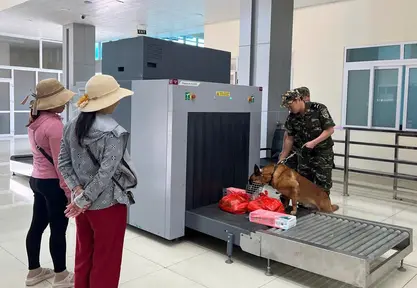
Trong bối cảnh kinh tế - thương mại quốc tế năm 2025 diễn biến phức tạp, khó lường, hoạt động xuất nhập khẩu của Việt Nam nói chung và khu vực miền núi phía Bắc nói riêng chịu nhiều tác động từ thiên tai, biến đổi khí hậu, cùng những hạn chế nội tại của nền kinh tế. Trên địa bàn hai tỉnh Cao Bằng và Tuyên Quang, nơi có nhiều cửa khẩu quốc tế và cửa khẩu phụ, hoạt động thương mại biên giới vừa tiềm năng vừa nhiều thách thức. Chính trong bối cảnh đó, Chi cục Hải quan Khu vực XVI đã nhanh chóng ổn định tổ chức, triển khai quyết liệt công tác cải cách, hiện đại hóa hải quan, tạo thuận lợi thương mại, tăng thu ngân sách và nâng cao hiệu quả quản lý nhà nước.;
25-12-2025, 11:14

Trong bối cảnh tiến trình chuyển đổi số quốc gia đang diễn ra mạnh mẽ, các dịch vụ công hiện nay đang tập trung chuyển mình theo hướng tối giản hóa giấy tờ, tối ưu hóa quy trình và giảm thiểu tối đa chi phí tuân thủ cho người dân cũng như cộng đồng doanh nghiệp . Đi đầu trong xu thế này, Hệ thống đăng ký trực tuyến do Cục Đăng ký giao dịch bảo đảm và Bồi thường nhà nước (Bộ Tư pháp) vận hành là hệ thống đăng ký trực tuyến toàn trình trong lĩnh vực đăng ký biện pháp bảo đảm bằng động sản (không phải là tàu bay, tàu biển, chứng khoán đã đăng ký tập trung), bằng cây hằng năm, công trình tạm. Hệ thống không chỉ giúp giải quyết hồ sơ nhanh hơn mà còn đảm bảo tính minh bạch và tiết kiệm đáng kể thời gian đi lại .;
22-12-2025, 20:40

Việc rút ngắn thời gian thực hiện thủ tục, tăng cường tính minh bạch, đồng thời cắt giảm tối đa chi phí và công sức là những giá trị thực chất mà người dân và doanh nghiệp được thụ hưởng khi sử dụng dịch vụ công trên Hệ thống đăng ký trực tuyến về biện pháp bảo đảm của Cục Đăng ký giao dịch bảo đảm và Bồi thường nhà nước (Bộ Tư pháp). Những ưu việt này càng được phát huy mạnh mẽ trong bối cảnh cả nước đang quyết liệt triển khai mô hình chính quyền địa phương hai cấp và đẩy mạnh tiến trình chuyển đổi số toàn diện năm 2025.;
22-12-2025, 20:36
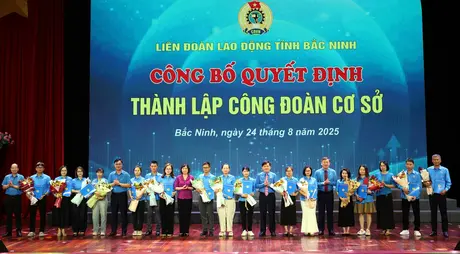
Xác định công tác phát triển đoàn viên, thành lập công đoàn cơ sở là nhiệm vụ trọng tâm, xuyên suốt của tổ chức Công đoàn, giai đoạn 2025–2030, Liên đoàn Lao động tỉnh Bắc Ninh phấn đấu hằng năm 100% doanh nghiệp mới thành lập có từ 25 công nhân lao động trở lên đều thành lập tổ chức công đoàn; kết nạp mới ít nhất 40.000 đoàn viên công đoàn, bao gồm cả đoàn viên là người nước ngoài. Đến năm 2030, toàn tỉnh phấn đấu phát triển mới 200.000 đoàn viên công đoàn và thành lập công đoàn tại 100% doanh nghiệp có từ 25 công nhân lao động trở lên.;
22-12-2025, 15:37