
Menu


The Universal Periodic Review (UPR) mechanism of the United Nations Human Rights Council is designed not as a "tribunal" for judgment, but as a forum for equal dialogue among nations regarding policies, laws, and results in ensuring human rights.
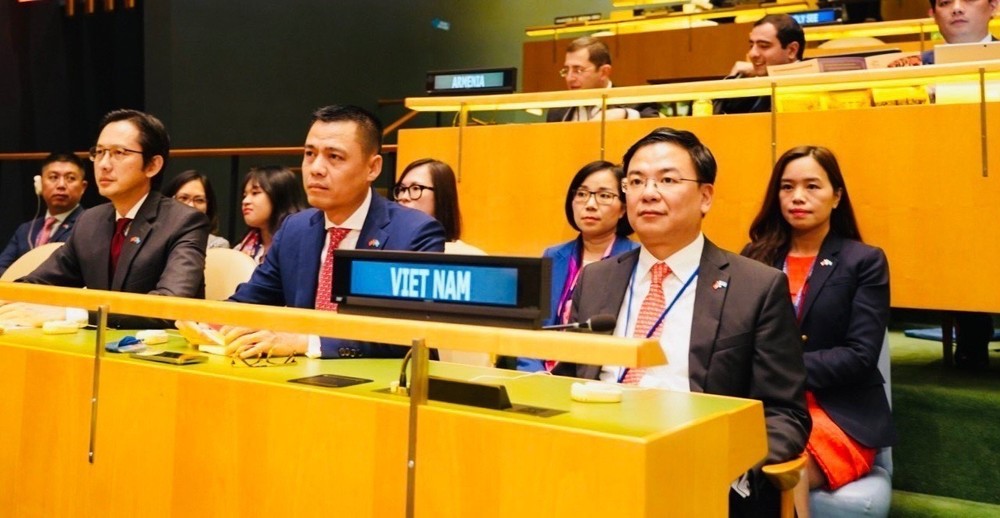
Since the very first cycle, Vietnam has consistently regarded the UPR as a mechanism for cooperation, based on universality, non-selectivity, and non-confrontation, where countries exchange experiences, share good practices, and listen to recommendations in a constructive spirit.
Cycle IV, taking place at the 46th Session of the UPR Working Group (May 2024) with results adopted by the Human Rights Council at its 57th Session (September 27–28, 2024), continued to demonstrate Vietnam's receptive and transparent attitude. Vietnam's National Report did not shy away from difficulties, frankly stating limitations and challenges, while fully updating the results of implementing recommendations accepted in Cycle III.
At the dialogue session in May 2024, 133 countries proposed 320 recommendations to Vietnam. At the session on September 27, 2024, Vietnam officially announced the acceptance of 271 out of 320 recommendations, reaching a rate of 84.7% – the highest level across all four UPR cycles.
These figures are not merely a "diplomatic achievement." Behind the very high acceptance rate is a clear political commitment: Vietnam is ready to absorb, internalize into law, and realize human rights standards suitable to national conditions. Notably, among the 271 accepted recommendations, 253 were fully accepted; the remaining recommendations were partially accepted, reflecting an effort to balance international requirements with practical conditions.
Arguments that Vietnam only gives "empty promises" to the UPR are increasingly untenable when looking at the implementation results of Cycle III. Of the 241 previously accepted recommendations, by early 2024, Vietnam had completed 209 recommendations (86.7%), partially implemented 30 recommendations (12.4%), and only 2 recommendations were scheduled for implementation at an appropriate time. These figures were officially announced during the consultation process for developing the Cycle IV National Report with the participation of many ministries, sectors, localities, socio-political organizations, and development partners, rather than being a "self-assessment" by a single agency.
In particular, to ensure commitments do not remain on paper, Vietnam has persistently developed and deployed Master Plans to implement UPR recommendations after each cycle. While Cycles II and III had Decisions 2057/QD-TTg (2015) and 1975/QD-TTg (2019) approving implementation Master Plans, establishing mechanisms for assigning specific tasks to each ministry and sector with clear timelines, indicators, and monitoring, by June 2025, the Prime Minister issues Decision 1172/QD-TTg approving the Master Plan for implementing recommendations accepted by Vietnam under UPR Cycle IV.
This plan is evaluated as a "roadmap" for the next 5 years: aimed at seriously implementing international responsibilities while strictly aligning with the Party and State's guidelines and policies on human rights; ensuring feasibility regarding resources; and integrating with national strategies, National Target Programs, and socio-economic development plans. Six major task groups cover areas from perfecting laws and institutions; ensuring economic, social, and cultural rights; civil and political rights; rights of vulnerable groups; to education, raising awareness, and strengthening international cooperation on human rights. This is undeniable evidence that the UPR is "localized" by Vietnam into a specific action program with accountability.
In that context, allegations that Vietnam "whitewashes" its human rights report, avoids dialogue, or "refuses to address serious concerns" appear lacking in goodwill and ignore reality. Some self-proclaimed "human rights watch" organizations deliberately cherry-pick a few rejected recommendations – mainly those contrary to the Constitution, demanding changes to the political regime, or interfering in internal affairs – to conclude that Vietnam is "non-cooperative."
In reality, the report of the UPR Working Group, statements at the Human Rights Council, and assessments by UN agencies and UNDP all recognize Vietnam as one of the countries with a high recommendation acceptance rate, frank dialogue, full feedback, and serious development of a Master Plan for implementation.
More importantly, the content of the recommendations accepted by Vietnam spans all fields: perfecting the legal system, judicial reform; economic development linked with sustainable poverty reduction; protecting the rights of women, children, persons with disabilities, and ethnic minorities; expanding access to education, healthcare, and social security; ensuring freedom of belief and religion; linking human rights with climate change response; promoting business and human rights; joining and ratifying additional international human rights conventions; and strengthening cooperation with UN Special Procedures. In other words, the UPR does not stand outside domestic development programs but is tightly "interwoven" into the inclusive development orientation that Vietnam has chosen.
Looking back at the entire process of UPR Cycle IV, it can be affirmed: Vietnam entered the UPR not with the mindset of being "on trial," but with a spirit of dialogue, cooperation, and joining hands for human rights progress. The acceptance of 84.7% of recommendations, the development of a Master Plan for implementation immediately after completing the review, continued active participation in other UN human rights mechanisms, and the implementation of a series of specific domestic programs and policies clearly demonstrate: Vietnam's international commitments on human rights always go hand in hand with national action.
In the context of hostile forces continuing to exploit "democracy and human rights" issues to distort facts and exert pressure, UPR Cycle IV serves as convincing proof: the path Vietnam has chosen is one of frank dialogue, open cooperation, taking substantive results in development and people's lives as the ultimate yardstick for all debates on human rights.
VNA | 20-12-2025, 10:30

19-03-2026, 18:13
19-08-2021, 15:19
30-05-2022, 18:18
28-12-2025, 12:23
19-03-2026, 20:10
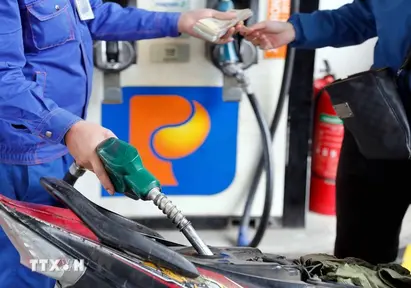
Sau khi điều chỉnh, xăng E5RON92 không cao hơn 22.504 đồng/lít; xăng RON95-III không cao hơn 25.575 đồng/lít; dầu điêzen 0.05S không cao hơn 27.025 đồng/lít; dầu hỏa không cao hơn 26.932 đồng/lít; dầu madút 180CST 3.5S không cao hơn 18.661 đồng/kg.;
12-03-2026, 22:10
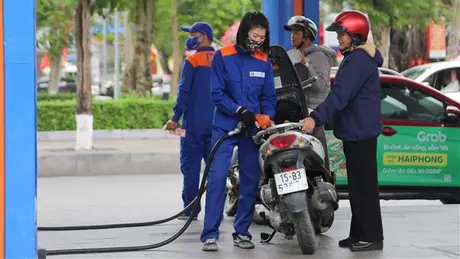
Giá xăng đảo chiều đi xuống sau 4 phiên tăng mạnh liên tiếp, xăng RON95-III về mức 25.000 đồng/lít. Giá dầu diesel và dầu hỏa cũng được điều chỉnh giảm mạnh. ;
11-03-2026, 22:22
![[CẬP NHẬT] Xung đột tại Trung Đông: Israel đối mặt các vấn đề về bảo vệ dân sự](https://storageovp.vnews.gov.vn/mediacache/attach/crawler/2026/03/09/3edbf74b-6131-4bb4-8392-dc81f0d1989d-786.webp "[CẬP NHẬT] Xung đột tại Trung Đông: Israel đối mặt các vấn đề về bảo vệ dân sự")
Phóng viên TTXVN tại Tel Aviv dẫn báo cáo mới của Trung tâm Nghiên cứu và Thông tin thuộc Quốc hội Israel (Knesset) cho thấy, khoảng 3,19 triệu người, tương đương 33% dân số, không có khả năng tiếp cận các hình thức bảo vệ cơ bản như phòng an toàn gia cố, hầm trú ẩn công cộng hoặc các cơ sở phòng thủ tiêu chuẩn khác.;
09-03-2026, 09:21
![[CẬP NHẬT] Xung đột tại Trung Đông: Iran và Mỹ đưa ra cảnh báo về cuộc xung đột tại Trung Đông](https://storageovp.vnews.gov.vn/mediacache/attach/crawler/2026/03/08/b2f2c0d9-98d8-48f5-97d5-603d46854277-761.webp "[CẬP NHẬT] Xung đột tại Trung Đông: Iran và Mỹ đưa ra cảnh báo về cuộc xung đột tại Trung Đông")
Ngày 8/3, cuộc xung đột tại Trung Đông đã bước sang tuần thứ hai và chưa có dấu hiệu hạ nhiệt. Bên cạnh các cuộc không kích liên tục giữa Mỹ, Israel và Iran, lãnh đạo các bên cũng không ngừng đưa ra những tuyên bố cứng rắn.;
07-03-2026, 20:15

Ngày 5/3/2026, Cục Phòng bệnh (Bộ Y tế) đăng tải dự thảo Thông tư quy định chi tiết một số điều của Luật Phòng bệnh để xin ý kiến các cơ quan, tổ chức, đơn vị và người dân trên Cổng thông tin điện tử Chính phủ và Bộ Y tế; trong đó có nội dung về đối tượng, nội dung giám sát trong phòng, chống rối loạn tâm thần. ;
06-03-2026, 15:45
![[TRỰC TIẾP] Xung đột ở Trung Đông: Cơ sở CIA tại Saudi Arabia bị tấn công - Israel phát động làn sóng tấn công quy mô lớn vào các mục tiêu ở Iran](https://storageovp.vnews.gov.vn/mediacache/Mam/VNEWS/attach/upload/04032026120434/567fe994-dcc7-4d73-a456-30941d19938a-906.webp "[TRỰC TIẾP] Xung đột ở Trung Đông: Cơ sở CIA tại Saudi Arabia bị tấn công - Israel phát động làn sóng tấn công quy mô lớn vào các mục tiêu ở Iran")
Ngày 3/3, cơ sở của Cục Tình báo Trung ương Mỹ (CIA) tại Đại sứ quán Mỹ ở Saudi Arabia đã bị một thiết bị bay không người lái tấn công. Sự việc diễn ra trong bối cảnh xung đột quân sự leo thang trong khu vực.;
04-03-2026, 11:00