Ensuring freedom of belief and religion in Viet Nam legal framework and vibrant reality
21-12-2025, 09:51
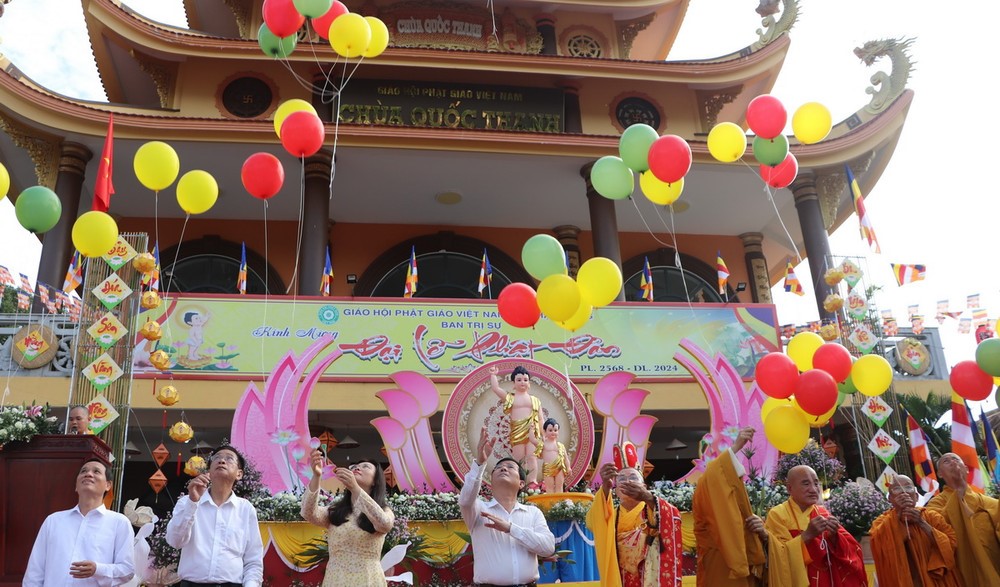
Looking at social life today, Viet Nam is truly a "living museum of religions," characterized by the harmonious presence of Buddhism, Catholicism, Protestantism, Caodaism, Hoa Hao Buddhism, Islam, the worship of Mother Goddesses, the worship of Tutelary Gods, and other beliefs. A noteworthy characteristic is not merely the number of religions, but the fact that these religions coexist, accompany the nation, and actively participate in social security, charitable activities, environmental protection, and the building of cultural life at the grassroots level.
An open legal framework approaching international standards
The 2013 Constitution affirms: "Everyone has the right to freedom of belief and religion, to follow or not to follow any religion. All religions are equal before the law. The State respects and protects the right to freedom of belief and religion. No one may violate the freedom of belief and religion or take advantage of belief and religion to violate the law".
The 2016 Law on Belief and Religion further concretizes this, recognizing the rights of everyone including foreign nationals legally residing in Viet Nam to express their beliefs, practice worship, participate in religious organizations, expand and build religious facilities, import and export religious scriptures and articles, and organize religious festivals in accordance with regulations.
The system of subordinate legal documents, including decrees and circulars guiding the implementation of the Law on Belief and Religion, has been issued in a relatively comprehensive manner, creating a synchronous legal corridor for belief and religious activities. Many domestic and international experts assess that the current legal framework is fundamentally compatible with international human rights standards regarding freedom of belief and religion; it both guarantees freedom and clearly stipulates the responsibility not to misuse religion to incite violence, sow ethnic division, or infringe upon community interests.
Reality is the most objective yardstick
According to the Government Committee for Religious Affairs, as of mid-2025, Viet Nam has 16 religions recognized by the State, with 43 religious organizations granted registration of operation or recognized as legal entities; approximately 95% of the population practices a belief or religion at varying levels. A 2024 report indicates that recognized and registered religious organizations currently have 27.7 million followers, accounting for 27.7% of the population; over 54,500 dignitaries, more than 144,000 sub-dignitaries, and over 29,800 places of worship nationwide.
It is noteworthy that these figures have all increased since the Law on Belief and Religion came into effect: the number of followers, dignitaries, sub-dignitaries, and places of worship has risen, and many new religious organizations have been recognized or granted registration. If the right to freedom of belief and religion were being "seriously repressed" as alleged by certain ill-intentioned reports, it would be difficult to explain this steady upward trend.
Furthermore, major religious festivals are held publicly and solemnly: the United Nations Day of Vesak has been organized in Viet Nam; Christmas, Easter, major Catholic and Protestant congresses, and traditional religious and belief festivals attract tens of thousands, even hundreds of thousands of participants, with active support from local authorities regarding security, traffic, and healthcare. Many large religious works and new belief facilities have been built or restored using socialized resources and contributions from followers, with the State facilitating land and construction procedures in accordance with the law.
Beyond meeting religious needs, religious organizations are also an important force in charitable activities and social security: building charity houses, caring for orphans and the lonely elderly, providing free medical examination and treatment, and supporting compatriots in areas affected by natural disasters and epidemics. The role of religion in "accompanying the nation" has become a specific feature of religious life in Viet Nam.
Refuting biased and imposed narratives
Despite the aforementioned realities, the U.S. Department of State has for many years placed Viet Nam on the "Special Watch List" (SWL) regarding religious freedom; the United States Commission on International Religious Freedom (USCIRF) continuously issues one-sided assessments based on unverified, single-source information.
On May 9, 2024, the Spokesperson of the Ministry of Foreign Affairs of Viet Nam rejected the "non-objective, biased, and inaccurate" assessments of the religious freedom situation in Viet Nam contained in the USCIRF 2024 Report. On July 4, 2024, Viet Nam continued to request the U.S. to remove Viet Nam from the SWL and "to conduct objective assessments based on accurate and comprehensive information sources".
Many articles in the mainstream press have pointed out that the reports by USCIRF and the U.S. Department of State have ignored a series of data and evidence regarding the vibrant development of religious life and the contributions of religions to social life; simultaneously, they deliberately "politicize" certain criminal cases, labeling them as "religious persecution".
In reality, what they term "prisoners of conscience" are, in many cases, individuals who have misused the name of religion to propagate separatism, incite ethnic division, oppose the State, and violate Viet Nam's criminal laws acts that no country can tolerate. A clear distinction must be made: genuine religious faith is always respected and guaranteed; however, the misuse of religion to negate the Constitution, call for violence, incite hatred, or oppose the regime is a violation of the law and must be handled accordingly.
The provisions of the Law on Belief and Religion and the 2013 Constitution clearly state that no one may take advantage of belief and religion to violate the law. The fact that competent authorities handle specific individuals for criminal violations cannot be interpreted as "religious persecution," nor can it be used to negate the overall positive picture of religious life in Viet Nam.
From the legal framework to the vibrant reality, it is evident that ensuring freedom of belief and religion is a consistent policy of the State of Viet Nam. The rich religious life, the increasing number of followers, dignitaries, and places of worship, and the safe and solemn organization of religious activities and festivals are the most convincing evidence, which cannot be denied by a few biased reports.
In the context where hostile forces continue to use the guise of "religious freedom" to exert pressure and interfere in internal affairs, it is necessary to continue strengthening information and communication, providing objective data, and promptly refuting wrongful arguments. This serves to protect the image of a united and tolerant Viet Nam, where everyone has the right to follow or not follow a religion and to live in a healthy religious environment, while also being required to comply with the law. This constitutes the foundation for both ensuring freedom of faith and maintaining socio-political stability, creating conditions for the country's sustainable development./.
tin mới

Thủ tướng Lê Minh Hưng tiếp Thủ tướng Thái Lan
08-05-2026, 21:52

Thúc đẩy hệ sinh thái M&A chuyên nghiệp, minh bạch và hội nhập quốc tế
08-05-2026, 21:48

Công đảng Anh mất nhiều ghế tại các hội đồng địa phương
08-05-2026, 21:43

EU thảo luận khả năng đối thoại với Nga về vấn đề Ukraine
08-05-2026, 21:41

Siết chặt an ninh trật tự xây dựng điểm đến du lịch an toàn, văn minh
08-05-2026, 21:41