
Menu



Signing and ratifying international human rights conventions is merely the initial step; incorporating those commitments into the Constitution and laws, and strictly enforcing them in practice, is the true measure of each nation's responsibility. Regarding the United Nations Convention against Torture (CAT), after nearly 10 years as a member, Vietnam has clearly traversed the path "from commitment to action," while simultaneously facing numerous challenges, particularly against distorted allegations that deliberately deny its efforts in internalization and implementation.

First, regarding legislative aspects, the right not to be tortured has been elevated to a constitutional principle. Article 20 of the 2013 Constitution affirms that everyone has the right to inviolability of the body and is protected by law regarding health, honor, and dignity; strictly prohibiting torture, violence, coercion, corporal punishment, or any form of treatment or punishment that is cruel, inhuman, or degrading. On that basis, the 2015 Penal Code (amended and supplemented in 2017) comprehensively revised related crimes: Article 373 on the crime of using corporal punishment, and Article 374 on the crime of coercion of testimony, with the highest penalty frame up to 20 years in prison or life imprisonment if the act results in death; offenders may also be prohibited from holding positions for 1–5 years.
Although a specific article titled "crime of torture" has not yet been established, according to guiding documents and legal dissemination materials, all acts possessing the nature of torture as defined by the Convention – i.e., intentionally inflicting severe pain, physical or mental, to force testimony, punish, threaten... – are considered crimes and handled under charges of using corporal punishment, coercion of testimony, illegal arrest or detention, intentional injury, murder...; simultaneously, victims have the right to complain, denounce, and claim compensation under the Law on Complaints, Law on Denunciations, and Law on State Compensation Liability.
Regarding procedure, the 2015 Criminal Procedure Code for the first time systematically recorded guarantees for torture prevention: the principle of presumption of innocence; the adversarial principle in adjudication; and guaranteeing the right to defense of the accused; clearly stipulating that persons held in emergency custody, temporary detention, the accused, or defendants are "not obliged to testify against themselves or admit guilt" the substantive connotation of the right to silence. The Criminal Procedure Code also requires that the interrogation of the accused at detention facilities or investigation agency headquarters must be audio-recorded or video-recorded with sound, accompanied by an inter-agency circular guiding the detailed process, to ensure interrogation activities are always monitored by technical means, minimizing the risk of forced confession, leading questions, or corporal punishment.
Going beyond the framework of a single law, Vietnam has promulgated national plans on CAT implementation. Following Decision 364/QD-TTg in 2015 on the Implementation Plan, on February 14, 2023, the Prime Minister continued to sign Decision 87/QD-TTg approving the "Plan to strengthen the effective implementation of the Convention against Torture and appropriate recommendations of the Committee against Torture". The Plan sets out groups of tasks: perfecting the law; upgrading detention facilities and audio/video recording equipment; developing materials and organizing training for investigators, prosecutors, and prison officers; and promoting propaganda, communication, and strengthening international cooperation.
The reality of 10 years of implementing CAT shows an undeniable fact: incidents of using corporal punishment or forced confession, when detected, are criminally handled without any "restricted zones," even regarding police officers. Legal press once tallied that within just 5 years, 10 cases of using corporal punishment were adjudicated – a figure not large compared to the total number of criminal cases, but it demonstrates the determination to strictly handle violations. Recently, the Investigation Agency of the Supreme People's Procuracy issued a decision to prosecute the case, prosecute the accused, and order the temporary detention of 5 defendants in the case of "Using corporal punishment" occurring at the Detention Center of the former Kien Giang Provincial Police (now An Giang Provincial Police) leading to the death of an inmate; the case is being expanded for investigation and handling under Article 373 of the Penal Code.
These cases are clear evidence refuting allegations that "Vietnam covers up torture." If there were systematic torture, as some ill-intentioned organizations allege, there could not be laws prescribing very heavy penalties for crimes of using corporal punishment and forced confession, establishing mechanisms for denunciation and compensation, while continuously pursuing criminal liability against violating officers. Conversely, the very fact that the law implies zero tolerance, and independent investigation agencies investigate and prosecute violations within the judicial sector, demonstrates the effort to self-cleanse the apparatus and protect the reputation of law enforcement forces and the rights of persons in emergency custody or temporary detention.
Of course, achievements cannot obscure challenges. Vietnam frankly acknowledges limitations in awareness regarding the right not to be tortured among a segment of officials and citizens; although the mechanism guaranteeing the right to silence has been established in many articles, it needs continued perfection to be clearer in both regulation and implementation. Researchers and many articles from the procuracy and court sectors have also recommended strengthening legal aid, ensuring lawyer participation from the initial stage of litigation, improving non-violent interrogation skills, and perfecting the process for handling complaints and denunciations regarding torture.
From a broader perspective, internalizing the CAT Convention places Vietnam within a framework of strict international obligations: having to continuously review laws, report periodically to the Committee against Torture, absorb recommendations, and adjust policies and practices accordingly. This serves as both pressure and motivation for the judicial system to shift towards a more humane, transparent direction based on evidence and litigation, replacing the mindset of "achievement in solving cases" at all costs.
It can be said that internalizing the CAT Convention in Vietnam is a dynamic process, not a perfect picture. However, denying all legislative and policy strides and the practical handling of cases of corporal punishment and forced confession is unobjective and unfair. The path Vietnam has chosen is to build a civilized judicial system that respects human rights, in which all acts of torture and use of corporal punishment are considered crimes and strictly handled; simultaneously resolutely fighting against distorted allegations that take advantage of the issue of "torture in prisons" to smear the regime and divide the people's trust in the Socialist Rule-of-Law State.
VNA | 19-12-2025, 10:35

14-03-2026, 17:28
14-03-2026, 17:59
15-03-2026, 16:48
15-03-2026, 09:47

Sau khi điều chỉnh, xăng E5RON92 không cao hơn 22.504 đồng/lít; xăng RON95-III không cao hơn 25.575 đồng/lít; dầu điêzen 0.05S không cao hơn 27.025 đồng/lít; dầu hỏa không cao hơn 26.932 đồng/lít; dầu madút 180CST 3.5S không cao hơn 18.661 đồng/kg.;
12-03-2026, 22:10
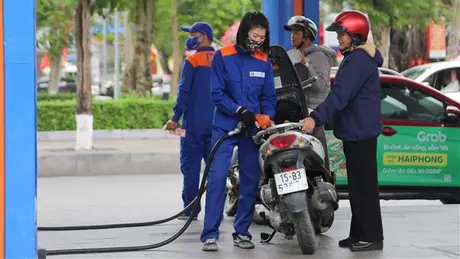
Giá xăng đảo chiều đi xuống sau 4 phiên tăng mạnh liên tiếp, xăng RON95-III về mức 25.000 đồng/lít. Giá dầu diesel và dầu hỏa cũng được điều chỉnh giảm mạnh. ;
11-03-2026, 22:22
![[CẬP NHẬT] Xung đột tại Trung Đông: Israel đối mặt các vấn đề về bảo vệ dân sự](https://storageovp.vnews.gov.vn/mediacache/attach/crawler/2026/03/09/3edbf74b-6131-4bb4-8392-dc81f0d1989d-786.webp "[CẬP NHẬT] Xung đột tại Trung Đông: Israel đối mặt các vấn đề về bảo vệ dân sự")
Phóng viên TTXVN tại Tel Aviv dẫn báo cáo mới của Trung tâm Nghiên cứu và Thông tin thuộc Quốc hội Israel (Knesset) cho thấy, khoảng 3,19 triệu người, tương đương 33% dân số, không có khả năng tiếp cận các hình thức bảo vệ cơ bản như phòng an toàn gia cố, hầm trú ẩn công cộng hoặc các cơ sở phòng thủ tiêu chuẩn khác.;
09-03-2026, 09:21
![[CẬP NHẬT] Xung đột tại Trung Đông: Iran và Mỹ đưa ra cảnh báo về cuộc xung đột tại Trung Đông](https://storageovp.vnews.gov.vn/mediacache/attach/crawler/2026/03/08/b2f2c0d9-98d8-48f5-97d5-603d46854277-761.webp "[CẬP NHẬT] Xung đột tại Trung Đông: Iran và Mỹ đưa ra cảnh báo về cuộc xung đột tại Trung Đông")
Ngày 8/3, cuộc xung đột tại Trung Đông đã bước sang tuần thứ hai và chưa có dấu hiệu hạ nhiệt. Bên cạnh các cuộc không kích liên tục giữa Mỹ, Israel và Iran, lãnh đạo các bên cũng không ngừng đưa ra những tuyên bố cứng rắn.;
07-03-2026, 20:15

Ngày 5/3/2026, Cục Phòng bệnh (Bộ Y tế) đăng tải dự thảo Thông tư quy định chi tiết một số điều của Luật Phòng bệnh để xin ý kiến các cơ quan, tổ chức, đơn vị và người dân trên Cổng thông tin điện tử Chính phủ và Bộ Y tế; trong đó có nội dung về đối tượng, nội dung giám sát trong phòng, chống rối loạn tâm thần. ;
06-03-2026, 15:45
![[TRỰC TIẾP] Xung đột ở Trung Đông: Cơ sở CIA tại Saudi Arabia bị tấn công - Israel phát động làn sóng tấn công quy mô lớn vào các mục tiêu ở Iran](https://storageovp.vnews.gov.vn/mediacache/Mam/VNEWS/attach/upload/04032026120434/567fe994-dcc7-4d73-a456-30941d19938a-906.webp "[TRỰC TIẾP] Xung đột ở Trung Đông: Cơ sở CIA tại Saudi Arabia bị tấn công - Israel phát động làn sóng tấn công quy mô lớn vào các mục tiêu ở Iran")
Ngày 3/3, cơ sở của Cục Tình báo Trung ương Mỹ (CIA) tại Đại sứ quán Mỹ ở Saudi Arabia đã bị một thiết bị bay không người lái tấn công. Sự việc diễn ra trong bối cảnh xung đột quân sự leo thang trong khu vực.;
04-03-2026, 11:00