Workers' rights in the context of integration: Challenges from new-generation FTAs and Vietnam's efforts
20-12-2025, 10:09
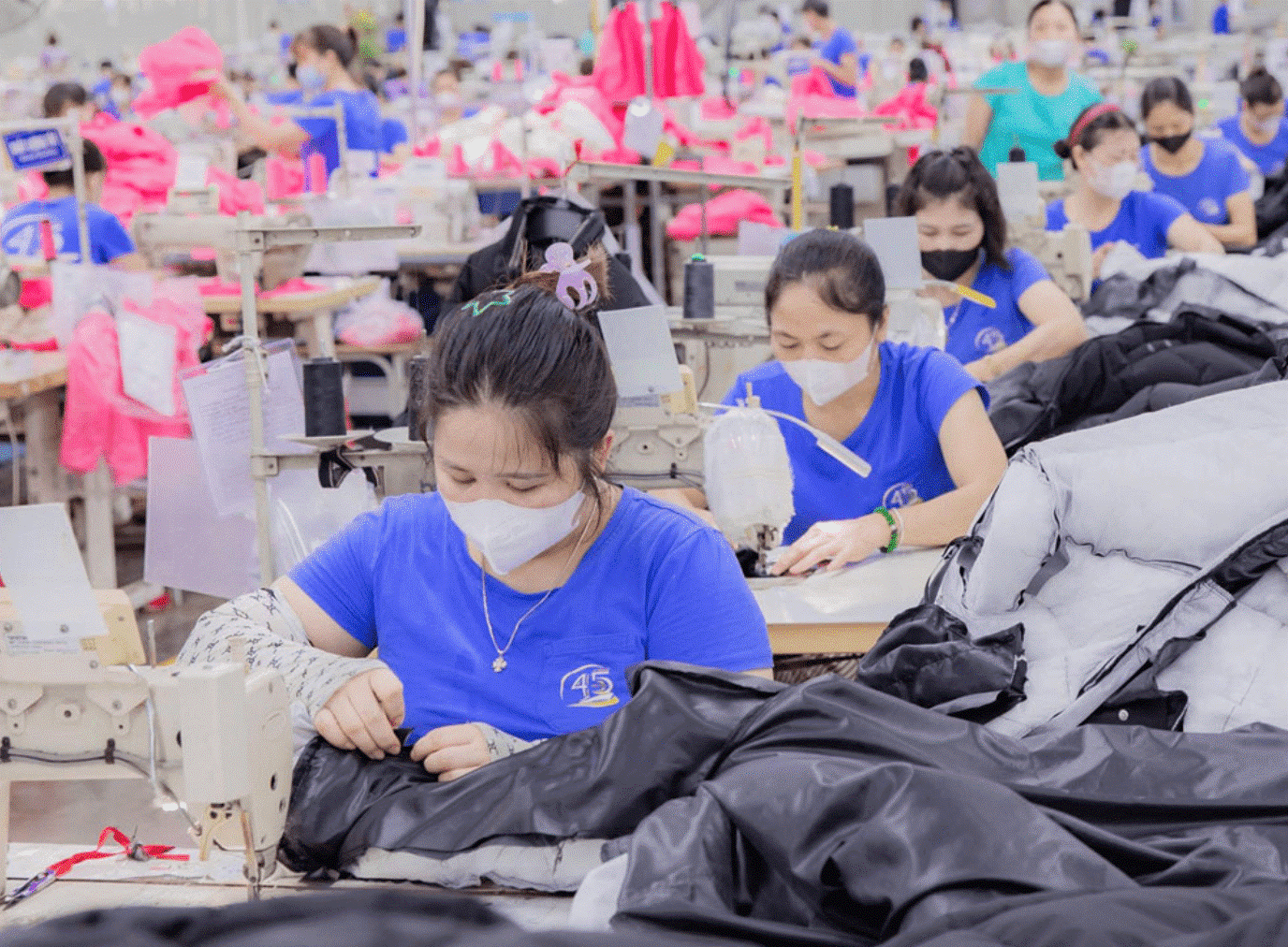
In recent years, Vietnam has entered the "playing field" of deep and broad integration through a series of new-generation free trade agreements (FTAs) such as the CPTPP, EVFTA, and UKVFTA. Accompanying tariff preferences and market expansion are very high commitments regarding labor, employment, and social security. In other words, economic integration compels Vietnam not only to export goods and services but also to "export" labor standards, in which workers' rights constitute a central pillar.
Labor standards in new-generation FTAs
The EVFTA dedicates Chapter 13 to "Trade and Sustainable Development," affirming that parties must respect and effectively implement the fundamental conventions of the International Labour Organization (ILO); parties must not use labor rights violations as a competitive advantage, nor lower labor standards to attract investment and trade. The CPTPP and UKVFTA also contain specific chapters or provisions on labor, closely linking trade preferences with compliance with international labor standards and mechanisms for regular consultation, monitoring, and dialogue.
This creates significant pressure on developing countries, but simultaneously serves as an opportunity for Vietnam to "raise the bar" for its labor market, improve the working environment, and better protect the rights and interests of tens of millions of domestic workers.
A significant breakthrough was the Labor Code of 2019, which for the first time recognized the model of worker representative organizations at the grassroots level alongside the grassroots trade union. Workers have the right to establish, join, and operate within a representative organization of their choice at the enterprise; these organizations are equal to one another in labor relations provided they meet legal requirements.
The Code stipulates in considerable detail the rights to collective bargaining, dialogue at the workplace, and participation in the development of wage scales and labor regulations ; as well as the right to represent workers in dispute resolution and the right to organize and lead strikes in accordance with legal procedures. Concurrently, employers have the obligation to provide conditions regarding time and venue, ensuring non-discrimination and preventing retaliation against members of the leadership of worker representative organizations. This constitutes a vital "legal infrastructure" to ensure that workers' rights to negotiation and dialogue do not exist solely on paper.
ILO Conventions: From commitment to action
To meet the requirements of new-generation FTAs, Vietnam has gradually acceded to the fundamental conventions of the ILO. In 2019, the National Assembly ratified Convention 98 on the Right to Organize and Collective Bargaining, creating an international legal basis for protecting the representation and dialogue rights of workers. In 2020, Vietnam ratified Convention 105 on the Abolition of Forced Labor, with an approval rate of 94.82% among National Assembly deputies; subsequently, the Government issued implementation plans via Prime Ministerial decisions, requiring the review and amendment of the legal system and strengthening inspection and strict handling of forced labor practices.
To date, Vietnam has ratified 9 out of 10 fundamental ILO conventions. Regarding Convention 87 on Freedom of Association, the Government is finalizing internal procedures, and various cooperation documents with the EU and the UK acknowledge that Vietnam is "undertaking domestic processes for early ratification". This demonstrates that reforms are not merely intended to "cope" with FTAs but are part of a long-term roadmap to build a modern, integrated labor market.
According to the General Statistics Office, in 2024, the labor force aged 15 and over reached approximately 53 million people, an increase of over 575,000 compared to 2023 ; the employed population reached 51.9 million, with the unemployment rate among the working-age population at approximately 2.24%, which is low relative to the general level of many countries in the region. The average monthly income of workers in 2024 reached 7.7 million VND, an increase of 8.6% compared to the previous year ; salaried employees earned an average of 8.7 million VND per month.
Regarding social security an important "safety net" for workers by the end of 2024, the country had approximately 20.11 million people participating in social insurance, equivalent to 42.71% of the working-age labor force ; health insurance participation stood at 95.52 million people, reaching 94.2% of the population ; and unemployment insurance covered about 16.09 million people, accounting for over 34% of the working-age labor force. These figures indicate that the rights to social security assurance, healthcare, and unemployment support for workers are increasingly being expanded, approaching the goal of "universal social security coverage".
Alongside achieved results, the 2024-2025 period marks strong advancements in perfecting the legal framework on social security, concretizing international commitments, and ensuring long-term benefits for workers. Most notably, the Law on Social Insurance 2024 (passed by the National Assembly on June 29, 2024, effective from July 1, 2025) has brought about fundamental changes. A breakthrough point is the provision reducing the minimum social insurance contribution period for pension eligibility from 20 years to 15 years, creating conditions for workers who join late or have interrupted participation periods to access retirement benefits sooner.
The Law also adds a "social retirement allowance" tier to form a multi-tiered social security system, expanding the beneficiary base and limiting lump-sum social insurance withdrawals to ensure income security for workers in old age. Concurrently, the Law on Employment (amended), passed by the National Assembly in June 2025 (effective from January 1, 2026), continues to reinforce the "safety net" for the labor market. The new Law focuses on expanding the subjects participating in unemployment insurance, ensuring flexibility in contribution rates, and strengthening support regimes for training and job retention. In particular, the development of a national labor database and a unified job exchange floor will facilitate workers' access to employment opportunities and minimize unemployment risks amidst economic volatility.
These legal adjustments, combined with positive statistical figures in 2024 regarding the coverage rates of social, health, and unemployment insurance, demonstrate that the right to social security assurance for workers is increasingly being expanded, approaching the goal of "universal social security coverage".
Rebutting distorted arguments regarding "Independent trade unions"
In the context of Vietnam amending its laws to allow for the diversification of worker representative organizations at the grassroots level, certain organizations and individuals lacking goodwill have deliberately distorted the truth, claiming that "Vietnam bans independent trade unions," or demanding the acceptance of organizations with political opposition agendas disguised as "unions".
It is necessary to emphasize that FTAs and ILO standards require the assurance of freedom of association and collective bargaining; they do not require any nation to permit the formation of disguised political opposition organizations within enterprises. The Labor Code of 2019 has opened the door for worker representative organizations voluntarily established by workers themselves, operating with the core objective of protecting the lawful and legitimate rights and interests of workers through dialogue and negotiation ; simultaneously, it clearly stipulates the responsibility not to misuse representation activities to violate the law, incite violence, or cause social instability.
These requirements are entirely consistent with international practices: in any nation, the right to organize and the right to strike are inextricably linked to the obligation to respect the legal order; representative organizations must not be turned into tools serving extremist political purposes that run counter to the common interests of workers and the business community.
It is evident that under the pressure and motivation from new-generation FTAs, Vietnam is shifting strongly from "commitments on paper" to institutional perfection, strengthened enforcement, expanded social security, and enhanced human resource quality. Protecting workers' rights is not merely to "meet conditions" set by partners, but is primarily a strategic choice for sustainable development, productivity improvement, and attracting responsible investment, avoiding a "race to the bottom" regarding wages and working conditions.
Significant challenges remain ahead: narrowing the informal employment sector, improving the quality of collective bargaining, ensuring a living wage, and perfecting the legal framework on worker representative organizations in line with the roadmap for acceding to Convention 87.... However, with what has been achieved regarding the amendment of the Labor Code, accession to ILO conventions, and the expansion of social, health, and unemployment insurance coverage, Vietnam has a solid basis to affirm: workers' rights are increasingly being better guaranteed within the integration process, and workers themselves are the subjects directly benefiting from that process.

tin mới

Chuyển từ sắp xếp xong bộ máy sang vận hành tốt bộ máy
02-06-2026, 21:54

Đam mê bóng đá gắn kết thiếu nhi Việt - Nga
02-06-2026, 21:46

Hà Nội chưa thông qua Đề án vùng phát thải thấp trong Vành đai 1
02-06-2026, 21:24

Hơn 1,2 triệu thí sinh đăng ký thi tốt nghiệp THPT năm 2026
02-06-2026, 21:23

15 nhóm nhiệm vụ, quyền hạn của Văn phòng Chính phủ từ 1/6/2026
02-06-2026, 21:22